


Microsurgery head and brain
The surgery of a cerebral tumor serves either to confirm a diagnosis, or to remove the tumor completely or as much as possible of the tissue.
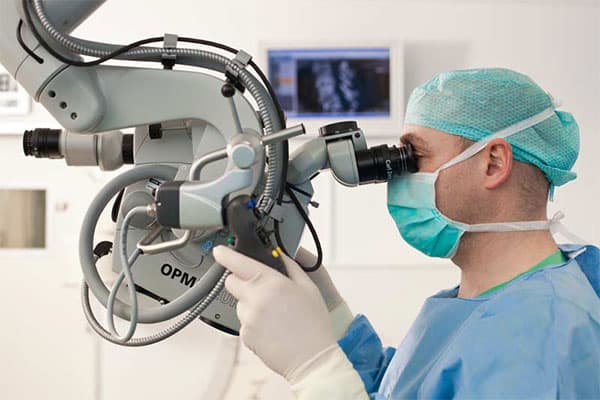
The leading principle is ‘keyhole surgery’. This means that the tumor is operated minimally invasive (invasive = to enter the body) with state-of-the-art surgery microscopes and special, very small instruments through an opening of the skull that is as small as possible. Imaging examinations (MRI, CT) enable surgeons to plan the access and to prepare for surgery. In special cases the so-called neuronavigation is utilized. Here the neurosurgeon works with computers and navigation systems making 3D navigation and 3D localization of benign and malignant tissue during surgery possible at any time. Today head tumor surgery is very gentle in comparison to earlier days. Benign tissue is not damaged and surgery in general not very bloody. A quick mobilization and rehabilitation comes along with these facts. Often patients are able to care for themselves on a normal ward 24 hours after surgery.

