

Implantology
What are implants?
Implants are artificial dental roots that are placed into the jaw bone and take over the role of the dental roots of the replaced teeth. They consist of a cylindrical part or a screw made of titanium, ceramic or a combination of both elements. These are biocompatible materials successfuly used for many years in dental surgery.
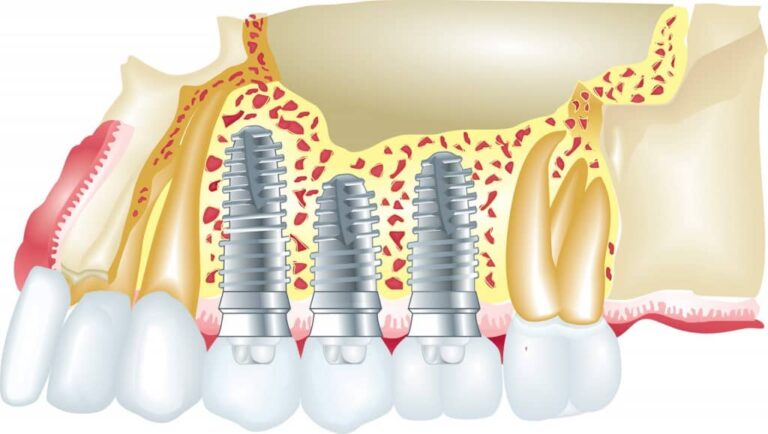
The implant fixture is connected to an abutment, which itself is a connective element for dental prostheses. Together they establish a firm connection for dental crowns, bridges and other prostheses. Therefore, we can avoid smoothing healthy adjacent teeth. Severe caries, periodontal (gum) diseases or loss of teeth due to accidents are the main reasons for dental implants.
Unlike conventional dentures, bridges, partial or full prostheses, implants prevent bone loss because they stabilize the jaw bone.
In addition to that, a high chewing comfort as well as the preservation of healthy teeth combined with an exceptional look are advantages of artificial dental roots. Hence, further damage by dental restoration is reduced to a minimum.
Dental implants are very popular owing to their high durability as long as oral hygiene is impeccable and professional dental cleanings are carried out regularly.
Dental implants are not only the safest alternative when it comes to artificial teeth but are also a solid foundation of further dental care.
Requirements of dental implants
- healthy gum
- no caries
- filling treatment of decayed teeth may be necessary
- periodic professional teeth cleaning (once a year recommended)
- stable jaw bone without inflammations in order to give a stable foundation for the new tooth root
- regular alignment of upper and lower jaw for the proper force transmission and correct bite
- patient´s general willingness to properly clean the teeth in order to support a long durability of the implant
Advantages of implantology
- unlimited sense of taste; conventional dentures often limit the sense of taste by covering the palate (roof of the mouth)
- preservation of adjacent teeth
- unaltered ability to chew and bite opposite to traditional dentures
- high safety, durability, comfort, biocompatibility and good looks
Contraindication dental implant surgery
Dental implant surgery is generally not possible if you suffer from
- a disease of the immune system (HIV, rheumatism, arthritis)
- a disease of the jaw bone or a very low bone density
- blood formation and metabolic disorders (e.g., diabetes): dental implant surgery is possible if wound healing abilities are high and infection risks are low enough.
(Smoking more than 10 cigarettes a day can also reduce the chance of success.)
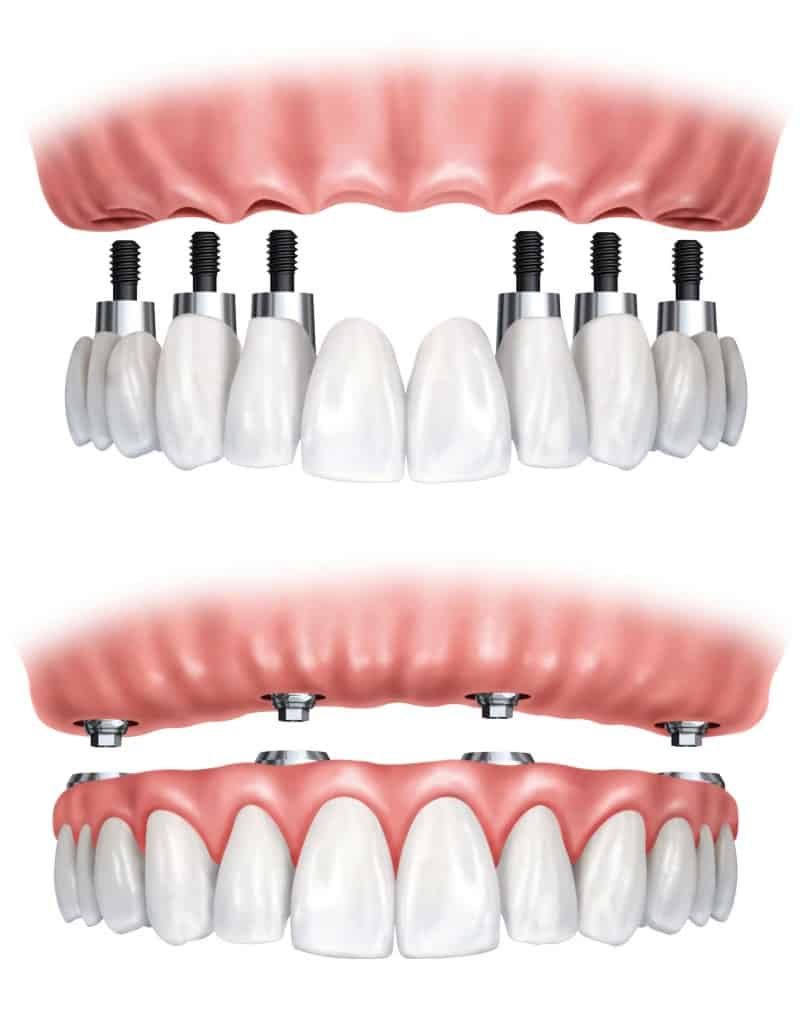
All-on-6
All-on-6 is the current most effective and fastest solution in dental implantology. We are able to provide you with full-fledged, high-quality dental implants and dentures within only one day. Waiting for several month until full recovery is obsolete.
Because this method makes it possible to even work with a low bone density, you do not only save time but are also able to use your new beautiful teeth without limitations directly after surgery.
Numerous studies have proven that this reliable concept yields a very high success rate. Visit us at Beta Dental, and we will discuss every relevant aspect about the All-on-6 treatment concept with you.
Cone beam computed tomography / 3D implants
The biggest disadvantage of conventional procedures is a two-dimensional depiction of a three-dimensional reality. In order to provide you with an optimal dental implant surgery, we are able to examine you by a special state-of-the-art X-ray-based technology, the so-called cone beam computed tomography.
The foundation of this diagnostic procedure is a specific 3D software that makes creating a three-dimensional representation of your bones possible. This gives us a high-contrast and precise insight into the inside of your bones, teeth and surrounding structures, which is important for thoroughly planning dental implant surgery. It also helps us build an individual drilling template. Additionally, we can include your individual nerve paths and bone characteristics in preparing surgery.
Thanks to the comfortable cone beam computed tomography, the risk of dental implant surgery is reduced and the outcome of the procedure is more predictable. Advantages of this three-dimensional diagnostic technique are radiological images of unrivaled precision, a reduced exposure to radiation and an improved planning and treatment process. Pain after surgery is also reduced significantly.
Fulfil your wish for safety and optimal dental implants!
We will be glad to discuss all relevant aspects of the state-of-the-art cone beam computed tomography with you!
About dental implant surgery
Before one or several implants are placed, the oral cavity/mouth has to be in a healthy state. Possible dental or periodontal (gum) diseases have to be treated prior to any measures of dental implantology.
Basic examination prior to dental implant surgery
At the beginning, the whole dental medical history is discussed, enabling us to avoid any complications based on previous or current dental diseases. Then we carefully examine your mouth and teeth, X-ray your teeth and jaw bone, measure the thickness of your mucous membrane and create planning models giving us a three-dimensional image of your bone material at the location where implants are to be placed. If necessary, we will also carry out a cone beam computed tomography to ensure optimal results. The findings of these examinations determine whether dental implant surgery is possible or not.
It is crucial to treat all dental, periodontal (gum) diseases prior to any dental implant surgery.
Placement of implants
If dental implant surgery is possible, it takes place under local anesthesia. Firstly we have to create sufficient space for the artificial dental root in the jaw bone. This space must precisely match the measurements of the implant to guarantee stability.
Due to different degrees of bone density of lower and upper jaw, lower jaw implants need 3 months to heal, upper jaw implants 4-6 months.
During this recovery period, there should be no pressure on the implant, which is ensured by a provisional solution. This way, a nice look and the ability to chew remain.
Implants and dentures
An implant is no dental prosthesis on its own. The so-called abutment is on top of the implant screw and represents the scaffold serving as a connection to a denture. If this dental prosthesis is a dental crown as a substitute for one tooth, a dental bridge as a substitute for multiple teeth or another kind of prosthetic solution depends on your individual needs and your financial background. For this reason, we make several dental impressions. As soon as your recovery period is over, we can place the dental prosthesis.
Dental implant surgery has the same general risks every other operation has why it is important to take care of several things after surgery: thorough oral hygiene and periodic follow-up examinations. These make it possible to detect and treat any signs of inflammation and inappropriate stress. Consequently, it makes sense to develop an individual preventive program for the perfect oral hygiene in order to maximize the durability of the dental implants.

